 Directory
Floral artist research trips: botanical gardens that spark complex bouquets
Planning a floral artist research trip is more than a pleasant stroll among blossoms—it is R&D that elevates colour stories, textures and fragrance layers in your next complex bouquet. This guide shows you how to select world-class botanical gardens, maximise each visit, and translate living inspiration into sell-out floral art.
Why research trips matter for avant-garde floral design
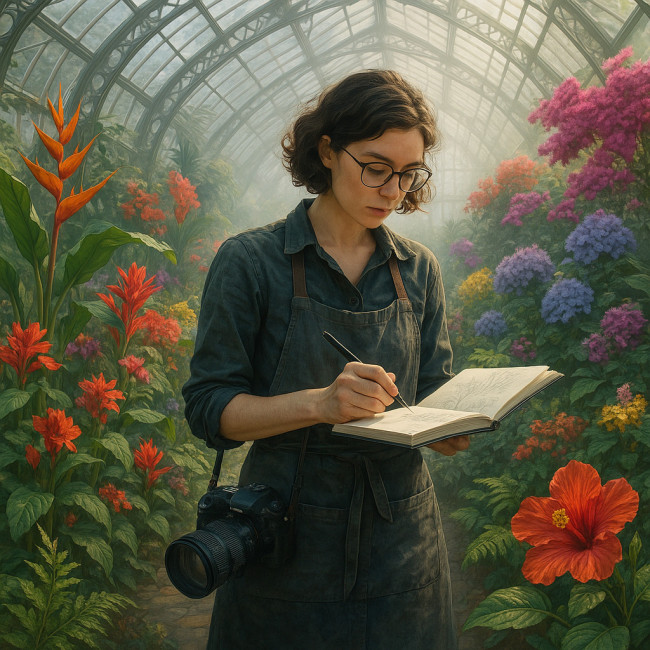
Trend boards and seed catalogues are useful, yet nothing beats walking through contrasting climate zones, smelling rare cultivars and observing growth habits first-hand. A single day in a well-curated botanical garden can reveal: from dawn until closing, you can witness how petals pivot to track sunlight, note subtle chromatic shifts that occur at midday, and record pollinator traffic that hints at scent projection—details that seldom surface in refrigerated wholesale warehouses. These real-time insights translate directly into more nuanced, longer-lasting and visually persuasive bouquets that clients perceive as both artful and scientifically informed.
- Unexpected colour harmonies created by seasonal overlap.
- Structural plant forms ideal for gravity-defying installations.
- Fragrance pairings you would not detect in refrigerated cut-flower warehouses.
- Biome-specific mechanics—how stems twist, climb or arch—that influence bouquet architecture.
Criteria for choosing a botanical garden
Not every garden deserves a spot on your itinerary. Score candidates with the checklist below to ensure the trip feeds directly into your creative pipeline.
- Species diversity index: More collections equal wider reference material for complex bouquets.
- Curatorial focus: Look for specialised conservatories—arid houses, orchidariums, alpine rockeries.
- Research amenities: Access to herbariums, guided expert tours or behind-the-scenes glasshouse passes.
- Photography policy: Unrestricted personal shooting saves you time compared with sketching everything.
- Transport & logistics: Proximity to international hubs keeps costs realistic for short R&D sprints.
Top botanical gardens that ignite complex bouquets
1. Royal Botanic Gardens, Kew – London, UK
Kew's 14 000 trees and 50 000 living plant species make it the world's go-to lab for colour gradation studies. Book a shelf pass in the Herbarium Reading Room to examine pressed specimens and pigmentation changes over decades. Its iconic Temperate House offers vertical lines ideal for photogrammetry mock-ups of towering bouquet concepts.
2. Singapore Botanic Gardens – Singapore
Tropical humidity keeps orchids blooming year-round, perfect for perfumery-driven bouquets. The National Orchid Garden showcases human-made hybrids alongside native species, letting you study resilience traits for long-haul event installations. Combine the visit with the city's cut-flower export market to test sustainability claims against your carbon-neutral flower sourcing roadmap.
3. Jardin des Plantes – Paris, France
Its Alpine Garden simulates high-altitude stress; a powerful resource for artists crafting “weathered elegance” arrangements. Weekly lectures by Muséum national d'Histoire naturelle botanists reveal emerging research you can weave into narrative bouquets—think climate-change commentary via selective plant symbolism.
4. New York Botanical Garden – USA
The Enid A. Haupt Conservatory hosts rotating biome rooms. Spend a morning tracking humidity transitions and photographing condensation patterns on foliage—a textural cue for bouquets pairing glossy monstera with matte ferns. NYBG's library grants temporary membership; plan literature deep-dives between plant studies.
5. Kirstenbosch National Botanical Garden – Cape Town, South Africa
Home to fynbos flora such as proteas and pincushions, Kirstenbosch demonstrates bold forms perfect for statement bouquets. Schedule your trip during protea peak (July–October) to test colour fastness in direct sun—data that impresses corporate clients seeking lobby pieces after reading pricing permanent floral installations.
6. Desert Botanical Garden – Phoenix, USA
Ideal for studying drought-tolerant stems that stay firm without hydration tubes. Pair insights with sustainable design briefs that demand low-water florals.
7. Río de Janeiro Botanical Garden – Brazil
Study bromeliads and heliconias in situ to master tropical verticality. Field notes here translate into resort-style event bouquets that command premium pricing.
Quick-glance comparison
| Garden | Key biome | Approx. species count | Research access level | Ideal visit season |
|---|---|---|---|---|
| Kew (UK) | Temperate & Tropical | 50 000 | Herbarium pass | May–June |
| Singapore BG | Tropical | 10 000 | Guided orchid tours | Any (humid) |
| Jardin des Plantes | Alpine & Mediterranean | 20 000 | Lecture series | April |
| NYBG | Mosaic Conservatory | 12 000 | Library membership | September |
| Kirstenbosch | Fynbos | 7 000 | Curator walk | August |
Itinerary hacks: turn one day into a reference library
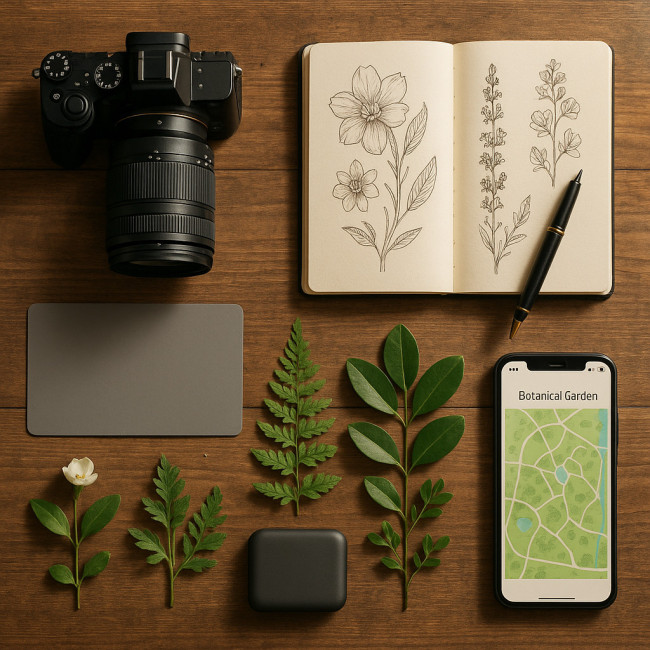
Arrive at opening time, when light is soft for photography and garden staff are available for ad-hoc questions. Record dawn dew shimmering on foliage, mid-morning shadow play across succulent beds, and late-afternoon golden-hour flares that dramatise petal translucency—each time slot teaches you how materials behave under varying illumination. Capture:
- Wide establishing shots for biome context.
- Macro images of stamens, thorns and leaf venation.
- Colour swatch photos with a grey card for accurate post-trip editing.
- Short video clips illustrating movement—wind sway data informs bouquet balance.
Back at the studio, file assets in a taxonomy aligned with the seasonal contracts for floral artists you target during proposal season.
Notebook to bouquet: converting field data into sellable designs
Create a materials palette
Cross-reference plant notes with regional flower availability reports. For exotics, map substitutions—banksia for protea, lisianthus for rare orchids—to maintain the colour story when import lead times fail.
Prototype fast
Use foam blocks or chicken wire to mimic stem thickness and placement you observed. Document each prototype with 360° photos; future clients appreciate transparency and may discover you via the craft designer training hub.
Pitch with authority
When sharing mood boards, cite specific garden observations—“Inspired by Kirstenbosch's Leucospermum cordifolium, this bouquet balances soft grasses against brightly spiked forms.” Authority shortens client approval cycles.
Budget considerations
Average research trip spend ranges from €350 (regional garden day trip) to €2 100 (intercontinental long weekend). Two winning cost-recovery models:
- Bundle trip insights into a paid workshop for florists-in-training.
- Offer VIP clients first-look access, adding exclusivity that commands higher retainers.
Environmental impact
Offset flights via accredited schemes and prioritise gardens practising conservation. Incorporating low-carbon stems learned on-site positions you well for corporate briefs aiming at net-zero, complementing the strategy in carbon-neutral flower sourcing.
Knowledge-check: Ready for your next research trip?
FAQ
- How many gardens should I visit per year?
- Most floral artists gain measurable creative ROI from two major trips and several local micro-visits annually.
- Can I bring cuttings back home?
- Usually not. Most countries restrict plant material imports; rely on high-resolution images, samples from legal suppliers or seed banks with export permits.
- What gear is essential for on-site research?
- A mirrorless camera, macro lens, grey card, portable power bank, archival notebook and moisture-proof specimen envelopes (for fallen leaves you are allowed to keep).
Next steps
Block a trip on your calendar now, then revisit this guide to refine logistics. Need to lock contracts before you travel? Our framework pairs perfectly with the in-depth pricing tactics explored in pricing permanent floral installations. Happy exploring!